If you’ve ever stood at the baseline, bouncing a ball before a serve, you might’ve had a fleeting thought about the space around you. Not in a technical way, but more like: This feels just right. Enough room to move, to breathe, to chase a wild shot without crashing into a fence. That sense of balance doesn’t happen by accident. It’s the product of dimensions that have been argued over, standardized, tweaked, and quietly respected for decades.
At first glance, a tennis court looks straightforward. Rectangular. Lines neatly painted. Net in the middle. Simple. But once you start digging into why it’s shaped the way it is — and how players actually use that space — things get more interesting.
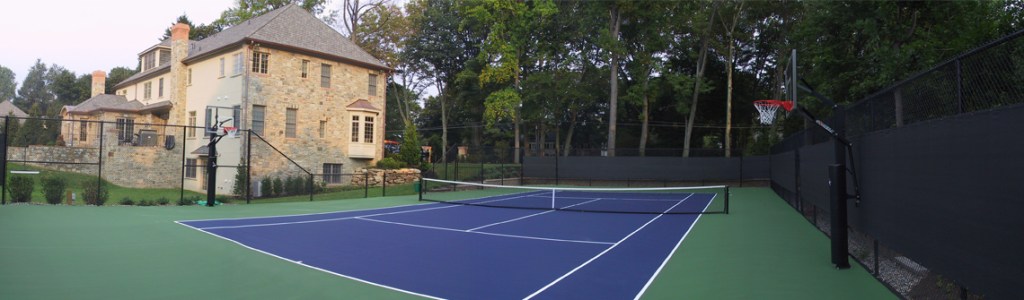
The official tennis court size is one of those facts people love to memorize and immediately forget. Yes, there are exact measurements. Singles courts are narrower than doubles courts. There’s a precise distance from baseline to net, and from service line to center mark. But focusing only on numbers misses the point. What matters is how those dimensions feel when you’re playing.
Think about a long rally from the baseline. The court gives you just enough room to recover after a wide forehand, but not so much that defense becomes endless. Or picture a serve-and-volley player charging the net — the distance is short enough to make it exciting, risky, alive. Too big, and the game slows down. Too small, and it turns chaotic. The current dimensions sit in this sweet spot that rewards both patience and aggression.
What’s funny is how differently people perceive the same space. Beginners often say the court feels huge. Everything is out of reach, every ball seems miles away. Advanced players, on the other hand, sometimes feel boxed in, especially during fast exchanges. Same dimensions, wildly different experiences. That’s part of the magic.
And then there’s doubles. Add a few extra feet on each side, and suddenly angles open up. Strategies shift. Communication matters more. Those tramlines — often ignored in singles — become decisive. It’s a subtle change on paper, but on court, it transforms the rhythm entirely.
Outside of competitive play, the idea of a tennis court takes on an even looser meaning. Drive past a public park or a schoolyard and you’ll see courts that technically meet the rules, but feel… different. Maybe the run-off space is tight. Maybe the fence is too close to the baseline. Maybe the surface has seen better days. And yet, people play. Kids learn the game there. Friends meet after work. The joy doesn’t disappear just because the proportions aren’t perfect.
That’s an important point. While official dimensions matter for tournaments and serious training, tennis has always thrived in imperfect spaces. Some of the most memorable matches happen on courts with quirks — a slightly uneven bounce, a low-hanging tree branch, a crack that everyone knows to avoid. Those flaws become part of the shared experience.
Still, when building or renovating a court, size decisions carry weight. It’s not just about fitting lines into a rectangle. You have to consider safety zones, spectator space, accessibility, and how many people will use the court daily. A cramped layout might technically comply with regulations, but it won’t feel welcoming. Players need room to chase a lob without fear of slamming into a fence.
There’s also the surrounding environment to think about. Wind patterns, sun angle, nearby noise — all of these interact with the court’s dimensions in subtle ways. A court oriented poorly can turn an afternoon match into a squinting contest. Too little clearance behind the baseline can discourage aggressive play. These aren’t details you notice immediately, but over time, they shape how people use the space.
One thing I’ve noticed over the years is how rarely casual players think about size until something feels off. You don’t walk onto a well-designed court and say, “Ah yes, these measurements are excellent.” You just play. But step onto a court that’s too tight, or oddly proportioned, and suddenly you’re hyper-aware of every step. That awareness pulls you out of the game.
Even watching tennis on TV can subtly change how we perceive space. Camera angles compress the court, making it look smaller than it is. Then you step onto one yourself and realize how much ground those pros are covering. It’s humbling. And it gives you a new appreciation for why the dimensions are what they are — generous enough to allow creativity, strict enough to demand precision.
 pulsemarket